Several NWTC departments including the Artisan Center, Recruitment, and Corporate Training were independently offering paid classes, workshops, and events with no consistent way to promote them or collect payment. The result was a fragmented experience for users who didn't know where to look, and an administrative burden for staff managing registrations across disconnected systems. A third-party solution was in place but was poorly optimized for search and difficult for staff to manage day-to-day.
This project replaced that experience with a purpose-built, NWTC-owned event registration portal designed from the ground up around the needs of both the people registering and the staff running the events.
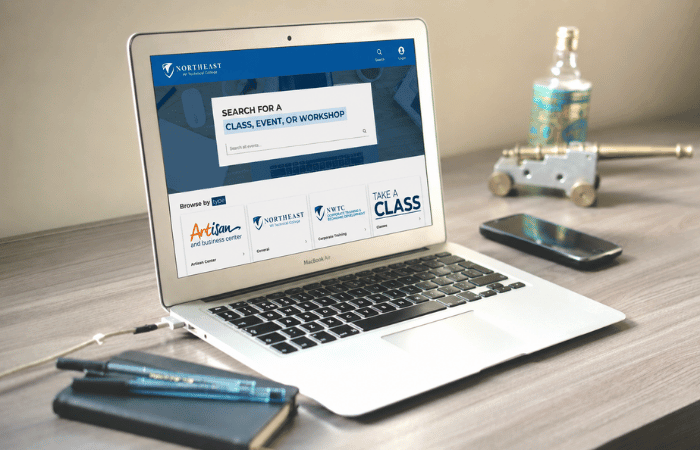
The existing portal created friction at every level. For users, there was no single place to find events across departments. For staff, editing and managing events was cumbersome. And for the college, the platform was essentially invisible to search engines — meaning people actively looking for NWTC classes and events couldn't find them.
The solution needed to serve multiple departments with genuinely different requirements, while hiding that complexity entirely from the end user.
I was involved from initial concepting through launch and have continued through multiple enhancement cycles. My contributions spanned competitive research, user flow mapping, prototype development in Figma, usability study design and facilitation, insight synthesis, and ongoing UX and accessibility improvements post-launch.


The development team and I analyzed event registration patterns in established platforms including Eventbrite and Ticketmaster, identifying conventions users already understood and interaction models worth adapting for NWTC's context.
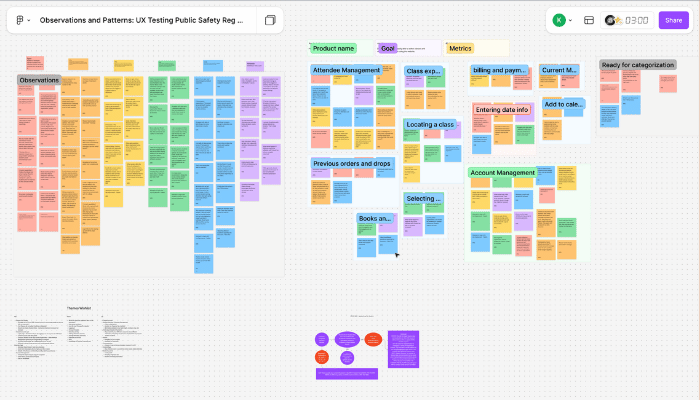
Using a Figma prototype of the Artisan Center portal, we conducted a moderated usability study combining open-ended questions about prior experience with prompted task sequences. Participants then rated ease of use and flagged areas of difficulty.
Three issues surfaced consistently across testers:
Each of these informed specific design decisions in the final product
Because departments had meaningfully different workflows and funding requirements, we started by mapping individual user flows for each before touching the interface. This surfaced the complexity early and allowed us to design an admin experience flexible enough to handle each department's needs while ensuring the front-end experience remained simple and consistent for users.
We launched with the Artisan Center as the pilot, iterated based on usability findings, then extended the front-end experience to Corporate Training and Recruitment events.
The NWTC Event Registration Portal allows departments to promote free and paid events, manage attendees, route funding to the appropriate accounts, and collect payment within a single system. Users can register themselves and additional attendees in one transaction, a feature specifically requested during usability testing.
The complexity of each department's decision logic is handled in the settings layer, keeping the user-facing experience clean regardless of which department's events a visitor is browsing.
This project remains active. Recent enhancement cycles have focused on WCAG accessibility compliance and brand alignment, with the Figma design file continuing to serve as a living component library across release cycles.

